Natural Language Query (NLQ) in BI: A brief history and comparison
Veezoo was founded with the mission to make access to information as easy as just asking for it. Traditional Business Intelligence (BI) solutions have recently decided to take a similar approach, so we are now taking a look at how they compare with Veezoo.

The first Natural Language Query (NLQ) systems
The publication of the article “Computing Machinery and Intelligence” by Alan Turing in 1950 can be considered as laying the foundation of the idea of Natural Language Processing. It was not until the 1970s however that Edgar Frank Codd introduced the concept of a relational database leading to “Rendezvous”, one of the first Natural Language Interfaces to a Database (NLIDB) – or NLQ, how we call them today. We have previously written a tribute to Edgar and his work and how this led to the development of SEQUEL (Structured English Query Language), later turning to SQL, with the dream of bringing access to information to the “non-trained computer specialist”, the “casual user”.

One of the first systems in the field was the The Lunar Sciences Natural Language Information System developed by William Woods in 1972, which allowed geologists to ask questions like ‘What is the average concentration of aluminum in high alkali rocks?’. In those early days, natural language interfaces were built with a specific database and a specific language in mind.
This led to most research in the mid-eighties focusing on making the technology more generic and broad based – leading to technologies such as CHAT-80 written entirely in Prolog and mostly based on manually written rules (check it out on Github). The expectation of the technology was huge and around the late 1980s probably peaked on the hype cycle. It did not take very long for these inflated expectations to come crashing down to the realization of the maturity of the technology and its dependence on a lot of manual work, especially as many well known ventures started to abandon or merge efforts such as the IBM LanguageAccess product or the Microsoft English Query system.
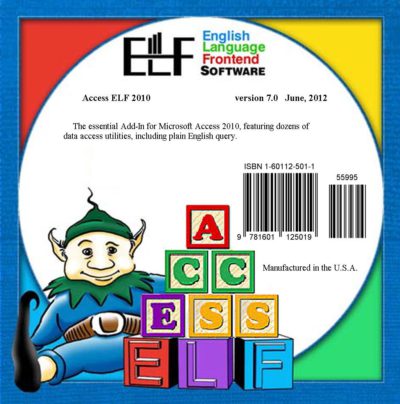
However there were some successes, one of them being ELF, which was built on top of Microsoft Access. It was one of the best systems at the time and old versions are even still available for purchase today. Also, it has a great mascot. Take a look at this fella:
The Natural Language BI Solutions of the 21st Century
With the web, the growth of available data, and major improvements in processing power and storage, natural-language analytics moved from hand-written rules toward machine-learning-based systems. The vendor landscape has changed many times since then, so this article treats those examples as historical context. Buyers should use current product documentation and live tests for present-day comparisons.
The birth of Veezoo
In early 2015 a group of students from ETH Zurich took part in a 24-hour Hackathon and came up with the initial idea for Veezoo: to answer questions asked in natural language automatically with data visualisations. They realized that traditional Business Intelligence solutions were surprisingly dumb and difficult to use, and that in the future, people will inevitably want to get the information that they need by simply asking an intelligent system. This was the birth of Veezoo.

Two years later, they published research on neural multi-step reasoning for question answering on semi-structured tables. That work reinforced the conviction that natural-language analytics needed more than a search box: it needed a system that could reason over data structures and business meaning.
Since then, Veezoo has become a truly intelligent and user-centric self-service analytics system that speaks your language and provides a super easy and fun way of exploring data, making even the most non-technical users able to carry out analytical work to help decision making.
2026 update: how to evaluate natural-language BI tools now
This section was refreshed in May 2026. Natural-language BI has changed substantially since the original point-in-time vendor tests, so buyers should evaluate current products with a live proof of value and official vendor documentation rather than relying on old screenshots.
The most important questions are no longer just "Can the tool answer a typed question?" but "Does it understand our business definitions, permissions, data relationships, and follow-up workflows?" A reliable natural-language BI evaluation should test governed metric definitions, ambiguous wording, multi-step analysis, row-level security, dashboard creation, and whether answers can be inspected by analysts.
Veezoo's current approach is to interpret natural-language questions through the Knowledge Graph, plan analysis over governed business concepts, and compile queries deterministically. That makes it different from generic text-to-SQL workflows where an LLM writes SQL directly against tables.
For current product details from other vendors, review their official documentation and product pages. Then test the same real business questions against your own data model.
Conclusion
There are a number of available solutions on the market when it comes to natural language queries. Most of them offer language as a side-feature only, while just a few of them were developed from the ground up with focus on a natural language interface. It is a very difficult problem to solve and most vendors choose to limit their solutions to a single table-view only or to restrict language to a technical grammar which doesn’t feel natural.
Natural language querying is one of those ideas that every 20 years reemerges, because it just feels like the right solution for self-service analytics. Yet, the maturity of the technology and the overall UX were always impediments for it to become mainstream. We believe that the time for it has come due to the technological progress in recent years. We have been working hard to make Veezoo the best self-service analytics solution when it comes to ease-of-use, as it was built from the ground up with this single objective in mind. In the end, if users don’t get the right answers from their questions or if they need to learn a new “language”, they inevitably go back to their standard reports and asking the data teams for the answer.
Natural language is ambiguous. It is vague. That’s why we built Veezoo to handle very smoothly its edge cases. Key for that is Veezoo’s dialog-based interface which offers the user the ability to clarify their intentions through an intuitive interaction with the system. It is not by chance that Veezoo users are amazed by how well it works and how easy it is to get started. It is due to our relentless focus on simplicity and making access to information as easy as just asking for it.
As companies notice that they spend vast amounts of time educating people on how to generate, find and request reports, they understand that having a self-service analytics solution like Veezoo reduces reporting requests and adds significant value to the organization and the quality of its decisions.
Sounds interesting? Start using Veezoo today for free and get answers from your data faster than you can say ‘natural language interfaces to databases’.